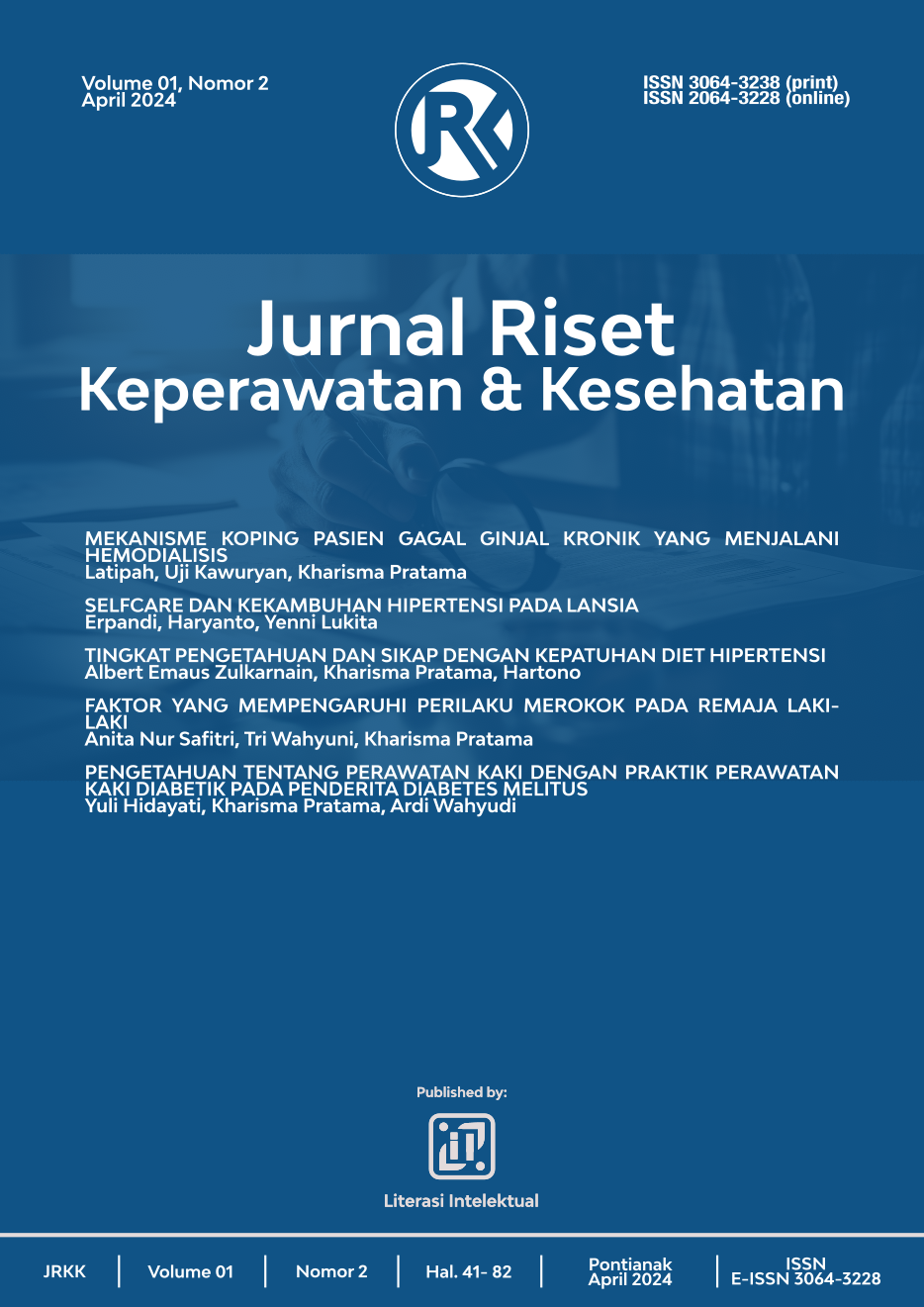
FAKTOR YANG MEMPENGARUHI PERILAKU MEROKOK PADA REMAJA LAKI-LAKI
DOI:
https://doi.org/10.71203/jrkk.v1i2.75Keywords:
smoking behavior, male adolescents, peer influence, parental influence, cigarette advertisingAbstract
Background: Smoking behavior among male adolescents remains a major public health issue in Indonesia. Adolescence is a critical developmental stage where individuals are vulnerable to social, familial, and media influences that can initiate early smoking habits. Objective: This study aimed to identify the factors influencing smoking behavior among male adolescents in Dusun Keramat 1. Methods: This research employed an analytical observational design with a cross-sectional approach. The population consisted of 850 male adolescents, with 89 respondents selected using a purposive sampling technique. Data were collected using a structured questionnaire covering parental influence, peer influence, personality, and advertising exposure. Descriptive analysis was used to determine the dominant factors influencing smoking behavior. Results: The findings revealed that most respondents were 17 years old (18%) and categorized as light smokers (56.2%), with the majority beginning to smoke during junior high school (55.1%). The most influential factors on smoking behavior were parental influence (70.8%), peer influence (66.3%), cigarette advertising (61.8%), and personality (59.6%). Conclusion: Smoking behavior among male adolescents is shaped by a combination of family, social, and media factors. Preventive efforts should focus on enhancing parental involvement and school-based health education to promote positive role modeling and reduce smoking initiation among youth
Downloads
Published
How to Cite
Issue
Section
License
Copyright (c) 2024 Jurnal Riset Keperawatan dan Kesehatan

This work is licensed under a Creative Commons Attribution 4.0 International License.